viernes, 4 de febrero de 2011

Aura Does Not Want to Eat

AURA NO QUIERE COMER.

Dolores Espinosa.


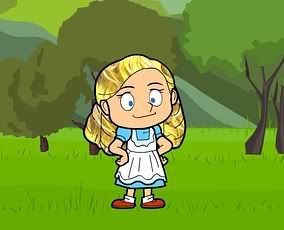
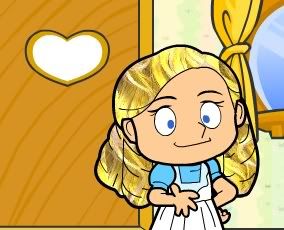
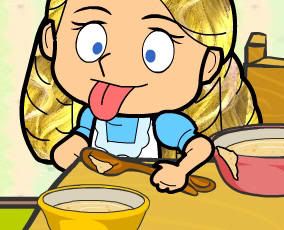
Aura does not want to eat. 
Aura no quiere comer.

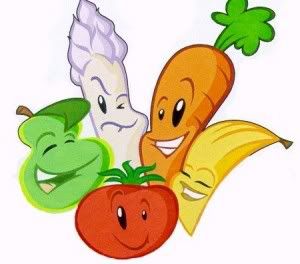
Her plate is full of vegetables and Aura hates the vegetables.
Su plato está lleno de verduras y Aura odia la verdura.

Aura is sure that to the vegetables doesn’t like her.
Aura está segura de que  ella tampoco le cae bien a las verduras.

Aura looks depth to the repugnant vegetables and know that they also are looking at her.
Aura mira fijamente a las repugnant  hortalizas y sabe que ellas también la están mirando.

Her mother says to her: let’s go eat.
Su madre le dice: ¡Vamos, come!

The little girl moves her fork slowly direct to the plate. And, suddenly, three or four buds of broccoli, by a jump, they stand up.  They seem a little smiling forest. Because the buds of broccoli smile and laugh and then turn and dance caught of the hands.  Aura tries to see them with the fork but the small trees of broccoli wring, bend, shrink, slip away… Oh, so there is no way!

La niña mueve su tenedor lentamente rumbo al plato. Y, de pronto, los tres o cuatro brotes de brócoli, de un salto, se ponen en pie. Parecen un pequeño bosque sonriente. Porque los brotes de brócoli sonríen y se ríen y luego giran y bailan cogidos de las manos. Aura intenta pillarlos con el tenedor pero los pequeños árboles de brócoli se retuercen, se curvan, se encogen, se estiran, se escabullen... ¡No hay forma de atraparlos!

Her mother insists again; ¡Let’s, eat that vegetable!
Su madre vuelve a insistir: ¡Vamos, cómete esa verdura!

Aura tries with the eggplant. But the two halves raise, join together and se sway from one side from another, they look like a west dancer dancing the dance of the belly.
Aura lo intenta con la berenjena. Pero... Las dos mitades se levantan, se
juntan y se contonean, parecen una bailarina oriental bailando la danza del vientre.

Her little arms are agitated from a side to another without stop, greet to the little girl, and make her tricks. Aura tries to prick to the violet eggplant but the very slip away one wrings, bends, shrinks, slips away, thus there is no way.
Sus pequeños bracitos se agitan de un lado para otro sin parar, saluda la niña, le hace burlas. Aura intenta pinchar a la morada berenjena pero la muy escurridiza se retuerce, se curva, se encoge, se estira, se escabulle... ¡No hay forma de atraparlas!

Her mother repeats her: Let’s go, let’s go, that is for today!
Su madre le repite: ¡Vamos, vamos, que es para hoy!

Aura swallows saliva and with the fork undertakes against the zucchini… or tries it.
Because, suddenly, without warning, the Little slices of the green zucchini put themselves to roll for over the plate, rebounding and jumping on the other vegetables; turning and turning to all speed.
Aura traga saliva y, tenedor en ristre, la emprende con el calabacín... o lo intenta.
Porque, de repente, sin aviso, las pequeñas rodajas del verde calabacín se ponen a rodar por todo el plato, rebotando y saltando sobre las otras verduras; girando y  girando a toda velocidad. 

Aura tries but, nothing, it is impossible, the little green discos, wring, bend, shrink, and slip away… Cachis, thus there is anyone who can! Her mother gives her a new warning: thus until you finish to at the vegetables!
Aura lo intenta pero, nada, es imposible, los pequeños discos verdes y blancos, se retuercen, se curvan, se encogen, se estiran, se escabullen... ¡Cachis, así no hay quien pueda! Su madre le da un nuevo aviso: ¡O las comes ahora o las tendrás de merienda... y de cena... y de desayuno... así hasta que te las acabes comiendo!

Aura looks angry to the vegetables, she catches the fork with firmness and she throws for them. But… What happens now? They are doing an authentic mess, a party, a great spree. The fat tomatoes and the thin asparaguses are joined to sing in chore funny songs.
Ella mira enojada a las verduras. Coge el tenedor con firmeza y se lanza  por ellas. Pero... ¿Qué pasa ahora? Las verduras de su plato están montando un auténtico alboroto, una fiesta, una gran, gran juerga. Los regordetes tomates y los delgados espárragos se unen para cantar a coro divertidas canciones.

The eggplant goes on with its exotic dance. The slices of zucchini give turns and turns for the plate. The broccoli laughs and turns over itself. The carrot jumps and the pumpkin plays with the cauliflower.
La berenjena sigue con su baile exótico. Las rodajas de calabacín dan vueltas y vueltas y vueltas por el plato. El brócoli ríe y gira sobre sí mismo. La zanahoria salta a la comba y la calabaza juega a palmitas con las coliflores.

The vegetables laugh about Aura and she looks them with her open mouth.
Suddenly… zoom! Your mother’s hand appears at full speed, takes Aura’s fork
And… Pum! eggplant… Pum! Tomato…¡Zas! Direct to the Aura’ smouth. –Chew!-, says her mother. Aura puts her face with disgust, chews and swallows.
Las verduras se burlan de Aura y ella las mira con la boca abierta. De repente... ¡Zoom! La mano de su madre aparece a toda velocidad, toma el tenedor de Aura y... ¡Pum! Berenjena... ¡Pum! Brócoli... ¡Pum! Tomate.... ¡Zas! Directos a la boca de Aura. ¡Mastica!-, dice su madre. Aura, poniendo cara de asco, mastica y traga.

The vegetables come again to be quiet. Very quiet. As if never they had moved before.
Aura doesn’t want to eat. She hates the vegetable and she is sure that the vegetable hates her. The next time those impertinent vegetables are going to become aware.
Las verduras se han vuelto a quedar quietas. Muy quietas. Como si nunca se hubiesen movido.  Aura no quería comer. Aura odia la verdura y está segura de que ella tampoco le cae bien a la verdura. La próxima vez se van a enterar esos vegetales impertinentes.

TASK 1
Comprensión de lectura:

1 .Why does Aura hate the vegetables?
2. How do the vegetables seem on the plate?
3. What do the broccolis do?
4. What do the vegetables do in the plate?
5. What does the eggplant do?
6. What do the fat tomatoes and the thin asparaguses do?
7. What does the slice of zucchini do?
8. What do the broccoli, the carrot and the pumpkin do?
9. What does her mother say to Aura?


Task 2

Escribir las palabras de acuerdo a las claves dadas, (fruits and vegetables).
Example: P _ _ _ s look like light-bulbs. key = pears

Which fruit or vegetable is described?

1. Sweet, tropical, long, yellow fruit. Monkeys like it.
ananas  banana  lemon  mango  papaya 

2.White, round, hot vegetable, you cry when cutting.
carrot  garlic  lemon  melon  onion 
3. Green vegetable with big leaves.
cabbage  carrot  cucumber  lettuce  lotus  

4. Sweet or hot vegetable or spice growing in shrubs.
tomato  tabasco  rapper  pepper  pepper 

5.Tropical, yellow, sour fruit with vitamin C.
orange  mango  lemon  banana  ananas 

6. Tropical, round, orange fruit with thick peel.
papaya  orange  mango  lemon  ananas 

7. Small, round, red fruit with a stone, growing in trees. Famous alcoholic drink can be made from it.
apple  cherry  plum  raspberry  redberry 

8.Red vegetable from which ketchup is made.
vine  tomato  potato  pepper  apple

9.Red or yellow round fruit, growing on trees in Europe.
apple  banana  lemon  pear  raspberry


THE PANCAKE DAY

INTRODUCCIÓN


What is Pancake Day?

Pancake Day (also known as Shrove Tuesday) is the last day before the period which Christians call Lent. It is traditional on this day to eat pancakes.
Shrove Tuesday always falls 47 days before Easter Sunday, so the date varies from year to year and falls between 3 February and 9 March.
In 2010 Pancake Day is on Tuesday 16TH OF FEBRUARY.


Task 1

Solucionar las preguntas de comprensión:

What is a pancake?
When is t Pancake Day celebrated?
Why are eaten Pancakes in this Days?

TASK 2

Usted debe crear un documento de Word con el resumen del día del Pancake.
You have to create a word document called “Pancake Day”.

TASK 3

Realizar una receta de algún Pancake.
Make a recipe of some Pancake.

Descarga: Click aquí

The Mirror

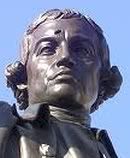
Edmund Burke (1729-1797)


Edmund Burke was an Irish statesman, author, orator, political theorist, and philosopher who, after relocating to England, served for many years in the House of Commons of Great Britain as a member of the Whig party. He is mainly remembered for his support of the cause of the American Revolutionaries, and for his later opposition to the French Revolution. Burke was praised by both conservatives and liberals in the nineteenth century and since the twentieth century he has generally been viewed as the philosophical founder of modern conservatism as well as a representative of classical liberalism.

Una poesía para reírnos un poco de nosotros mismos y que fuera escrita por el filósofo irlandés Edmund Burke (1729-1797), uno de los principales pensadores liberales de siglo XVIII, La traducción se ha realizado tratando de mantener el ritmo del poema, no así, por razones obvias, la rima.


THE MIRROR
EL ESPEJO
I look in the mirror
And what do I see?
A strange looking person
That cannot be me.
For I am much younger
And not nearly so fat
As that face in the mirror
I am looking at.

Oh, where are the mirrors
That I used to know
Like the ones which were
Made thirty years ago?

Now all things have changed
And I’m sure you’ll agree
Mirrors are not as good
As they used to be.

So never be concerned
If wrinkles appear
For one thing I’ve learned
Which is very clear.

Should your complexion
Be less than perfection
It is really the mirror
That needs correction!!
Miro en el espejo
¿Y qué observo?
Alguien de apariencia extraña
Que no puedo ser yo.
Pues soy mucho más joven
Y lejos estoy de ser tan obeso
Como ese rostro del espejo
Al que estoy mirando.

Ah, ¿dónde están los espejos
Que yo solía conocer
Como aquellos que se
Hacían hace treinta años?

Ahora todo ha cambiado
Y estoy seguro que compartes
Que los espejos no son tan buenos
Como acostumbraban a serlo.

De modo que no te preocupes
Si aparecen las arrugas
Pues una cosa he aprendido
Que es muy evidente.

Si observas que tu semblante
Lejos está de lucir perfecto
El que necesita un ajuste
¡¡ Es en realidad el espejo !!
Task 1

Fill in the right forms of the possessive adjectives.
Principio del formulario

1. 
 You live with (you)  beautiful wife.
2. 
 What are (they)  long names?
3. 
 We want to clean (we)  dirty shoes.
4. 
 We are tired but (we)  strong children aren't.
5. 
 This is (he)  big shoe.
6. 
 Thank you for (you)  long letter.
7. 
 She dances with (she)  tall boyfriend.
8. 
 Oxford is famous for (it)  old university.
9. 
 It is (we)  heavy car.
10. 
 I like (I)  interesting job.
11. 
 I know him but I do not know (he)  clever wife.
12. 
 I know (you)  best friend.
13. 
 I do not know (you)  lazy wife.
14. 
 He lives with (he)  rich parents.
15. 
 Do you like (I)  fat dog?
16. 
 (They)  healthy children are at school.
17. 
 (She)  car is expensive.
18. 
 (I)  slim daughter works in a restaurant.
Final del formulario
Principio del formulario
Task 2


Fill in the right forms of the possessive adjectives.

1. 
 You live with (you)  beautiful wife.
2. 
 What are (they)  long names?
3. 
 We want to clean (we)  dirty shoes.
4. 
 We are tired but (we)  strong children aren't.
5. 
 This is (he)  big shoe.
6. 
 Thank you for (you)  long letter.
7. 
 She dances with (she)  tall boyfriend.
8. 
 Oxford is famous for (it)  old university.
9. 
 It is (we)  heavy car.
10. 
 I like (I)  interesting job.
11. 
 I know him but I do not know (he)  clever wife.
12. 
 I know (you)  best friend.
13. 
 I do not know (you)  lazy wife.
14. 
 He lives with (he)  rich parents.
15. 
 Do you like (I)  fat dog?
16. 
 (They)  healthy children are at school.
17. 
 (She)  car is expensive.
18. 
 (I)  slim daughter works in a restaurant.
Final del formulario

Descarga: Click aquí

Goldilocks and the tree bears

Brothers Grimm


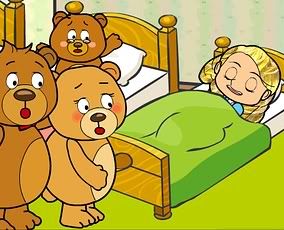
Once upon a time there was a little girl. Her name was Goldilocks. She had golden hair.

Había una vez una pequeña niña. Su nombre era Ricitos de Oro. Tenía cabello dorado.


One day Goldilocks was walking in the forest. She saw a house and knocked on the door. She went inside. Nobody was there.

Un día Ricitos de Oro se encontraba caminando por el bosque. Vio una casa y golpeó en la puerta. Entró. No había nadie allí.


Goldilocks saw three bowls on the table. She was hungry.

Ricitos de Oro vio tres tazones sobre la mesa. Tenía hambre.


"This porridge is too hot!" "This porridge is too cold!" "This porridge is just right!" Goldilocks ate all the porridge.

"¡Esta leche con miel está muy caliente!" "¡Esta leche con miel está muy fría!" "¡Esta leche con miel está bien!" Ricitos de Oro comió toda la leche con miel.


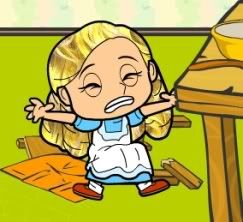
Goldilocks was tired now. "This chair is too big!" "This chair is too big, too!" "This chair is just right!" But the chair broke!

Ahora Ricitos de Oro estaba cansada. "¡Esta silla es muy grande!" "¡Esta silla también es muy grande!" "¡Esta silla está bien!" ¡Pero la silla se rompió!


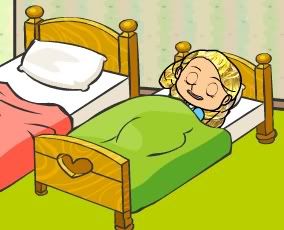
Goldilocks was very tired. She went upstairs. "This bed is too hard!" "This bed is too soft!" "This bed is just right!"

Ricitos de Oro estaba muy cansada. Fue al piso de arriba. "¡Esta cama es muy dura!" "¡Esta cama es muy blanda!" "¡Esta cama es perfecta!


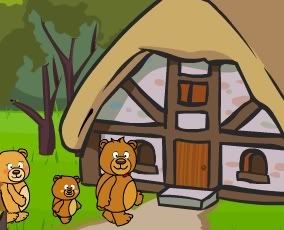
Soon, the bears came home.

Al rato, los osos regresaron a su hogar.


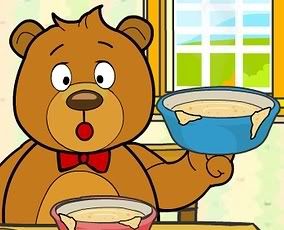
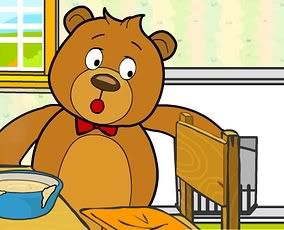
"Someone's been eating my porridge!” Said Daddy Bear.

"¡Alguien se ha comido mi leche con miel!" Dijo Papá Oso.


"Someone's been eating my porridge!” Said Mummy Bear. "Someone's been eating my porridge – and it's all gone! Said Baby Bear.

"¡Alguien se ha comido mi leche con miel!" Dijo Mamá Osa. "¡Alguien se ha comido mi leche con miel – y se la acabó toda!" Dijo Bebé Oso.


"Someone's been sitting on my chair!” Said Daddy Bear. "Someone's been sitting on my chair!” Said Mummy Bear.

"¡Alguien se ha sentado en mi silla!" Dijo Papá Oso. "¡Alguien se ha sentado en mi silla!" Dijo Mamá Osa.


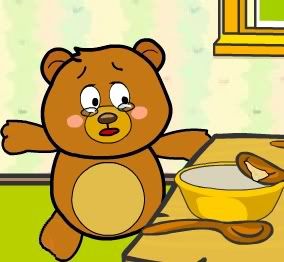
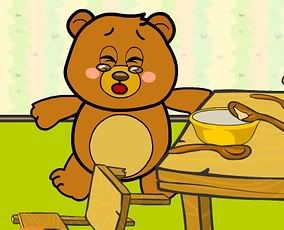
"Someone's been sitting on my chair – and it's broken”! Said Baby Bear.

"¡Alguien se ha sentado en mi silla – y está rota!” Dijo Bebé Oso.


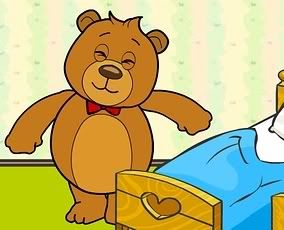
"Someone's been sleeping in my bed!” Said Daddy Bear. "Someone's been sleeping in my bed!" Said Mummy Bear.

"¡Alguien ha dormido en mi cama!" Dijo Papá Oso. "¡Alguien ha dormido en mi cama!", Dijo Mamá Osa.


"Someone's been sleeping in my bed – and she's still there!” Said Baby Bear.

“¡Alguien ha dormido en mi cama – y todavía está allí!” Dijo Bebé Oso.


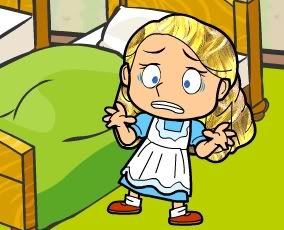
Goldenlocks woke up and saw the three bears. “Help!”.

Ricitos de Oro se despertó y vio a los tres osos. “¡Auxilio!”.


Escucha este cuento por medio de este link: Click aquí


Task 1

Traducir y responder las preguntas de comprensión.
1.     What is the tittle of the tale?
1.     What is the name of the little girl?
2.      Was the house in the forest with people?
3.      Which foods were in the dining room of the house?
4.     Was Goldilocks hungry?
5.     Was she tired?
6.     Who enters to the house?
7.     Was she scared?
8.     What does Goldilocks do?

Task 2

Traducir las siguientes preguntas y respuestas cortas con el verbo To Be pasado.

1.      Was Goldilocks hungry?
Yes, she was.

2.      Was there some milk on the table?
Yes, there was.

3.      Was she drinking the milk and the honey?
Yes, she was.


4.      Was she using the bed of the house?
5.      Was she using the chair in the house?
No, she wasn’t

6.      Was she sleeping in the house?
7.      Was she scared when she saw the three bears?
Yes, she was.

Task 3

·        Llenar el crucigrama con nombres de animales.

·        Leer la definición dada y tratar de adivinar con  las claves dadas.


Description: Find the word in this column


A _____ looks like a horse with black and white stripes on its back.  


_____ are the most devoted friends of people.  


Australia is famous for its _____.  


Do you know that the _____ is called the king of animals?  


A _____ is a large animal that used to serve man but nowadays it is kept as a pet.  


The _____ is an animal with the longest neck.  


_____ing is the hobby of many people but you need water.  


Spiders eat _____.  


_____ are the most famous animals that carry their houses on their backs.  


_____ are the biggest mammals in the world.  


*  


Tom is a cat and Jerry is a _____.  


The _____ is one of the largest flying birds.  


The river Nile is famous for its predators the _____.  


We like honey produced by _____.  


Beware of poisonous _____ in Australia.  


Descarga del cuento y ejercicios: